What Is a Purchase Order? How POs Work, With an Example
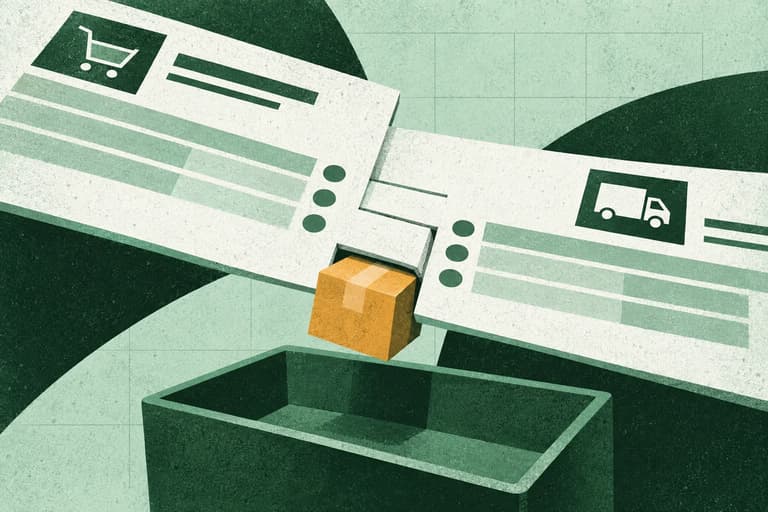
A purchase order (PO) is a legal document a buyer sends to a supplier to request specific goods or services. It becomes a binding contract once the supplier accepts it. For you as the seller, it fixes the items, price and terms before you do the work or ship anything.
The practical point is simple. Your client's accounts payable (AP) team will match your invoice to that PO. If the invoice does not carry a valid PO number, it can become an exception, get delayed or be sent back. Quoting the PO number on every invoice is one of the easiest ways to get paid faster.
Data note: AP benchmarks in this article come from Ardent Partners' 2026 report (published September 2026), which is Basware-sponsored, and a secondary summary of it. Payment-time figures cover the September 2026 quarter. These figures can change as new data is released.
What Is a Purchase Order?
The buyer issues the PO before delivery. It says what the buyer wants, in what quantity, at what price and on what terms. Corpay describes it as locking in price, quantity and delivery terms.
QuickBooks notes that customers often need a PO with a unique PO number for their AP process. Not every purchase needs one. Sage says typical cases are inventory, large-dollar buys, capital expenditures, and bulk or recurring orders.
What Goes on a Purchase Order (With a Sample PO)
Xero lists five essentials:
- A unique PO number for tracking
- Buyer and supplier names, addresses and contacts
- Items, quantities and prices
- Delivery terms: dates, locations and shipping method
- Payment conditions, such as Net 30
A longer checklist adds the order date, estimated delivery date, SKUs and descriptions, billing and shipping addresses, subtotals, taxes and the final total. Tipalti also lists an extended price for each line, which is quantity × unit price, plus discounts, subtotal, sales tax and total.
Here is an illustrative example from Aequo AP. PO 4518 is for 200 pallets at $42.00 each, a total of $8,400. Your invoice should repeat PO 4518 and match those lines.
How a Purchase Order Works From PO to Payment
- The buyer sends the PO to the supplier.
- The supplier accepts it, which makes it a binding contract.
- The supplier delivers the goods or services.
- The buyer records what was received.
- The supplier sends an invoice that quotes the PO number.
- AP checks the invoice and pays it.
The PO number lets you reference the order on invoices and shipping documents, which saves matching time and reduces errors. HighRadius adds that the number links related documents such as goods receipts, invoices and payments. QuickBooks says that once an order is fulfilled, the PO should be converted to a bill or invoice.
Purchase Order vs Invoice
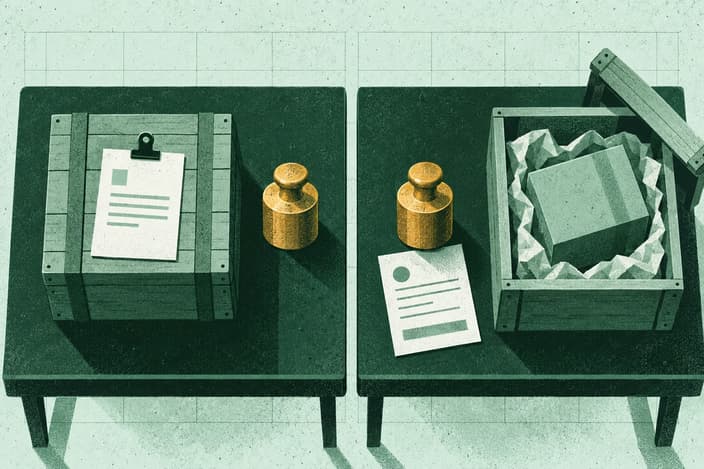
A PO comes from the buyer before delivery and requests goods or services. An invoice comes from the seller after delivery and requests payment. Salesforce says a PO focuses on order terms, such as quantity, products and delivery date, while an invoice focuses on payment terms. Price appears on both and should match.

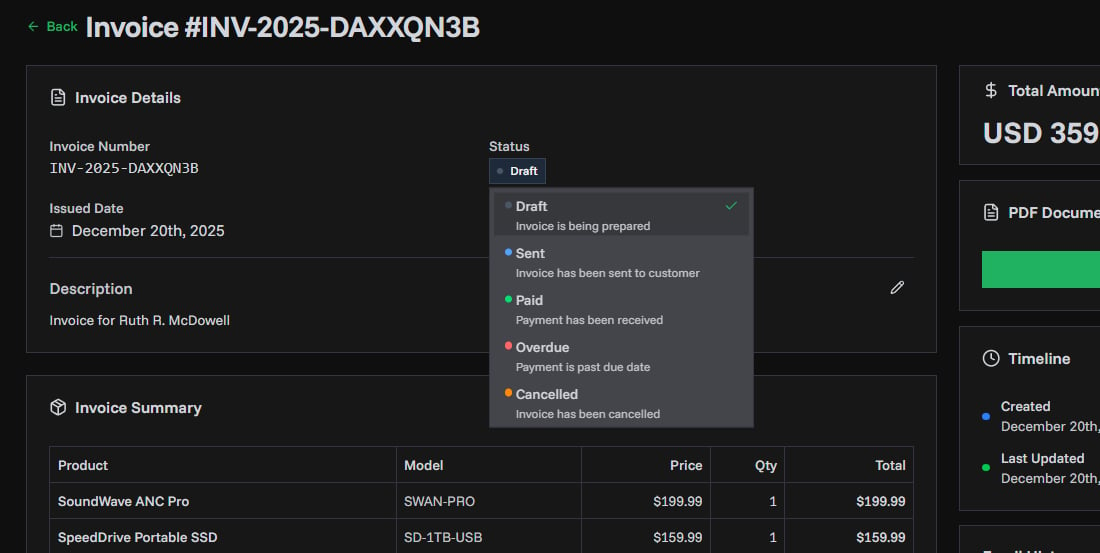
An invoice typically contains a unique sequential invoice number, invoice date, the PO number, due date, payment terms, how and where to pay, line items, tax, shipping, total and amount due.
HighRadius explains that a PO is not recorded as a financial liability, while an invoice is recorded as a liability in accounts payable once validated. That is a vendor's explanation, not an accounting standard.
Why Accounts Payable Rejects Invoices Without a PO Number
Many buyers run a three-way match. They compare your invoice with the PO and the receiving record before paying. If vendor, items, quantities and prices agree within tolerances, the invoice is approved. Otherwise it becomes an exception for the buyer, the receiver or you to resolve.
Without a PO reference, AP may need to contact the supplier, buyer or stakeholder before processing. Some buyers go further. Clemson University's No PO, No Pay policy says invoices that do not clearly state a valid University PO will be rejected and returned to the supplier. Gallaudet University rejects for payment any invoice presented without a PO number, apart from exempt categories such as utilities, leases and insurance premiums. These are university policies, not survey data, but they show the rule in practice.
If no PO was ever issued at Clemson, the department must raise an after-the-fact PO with extra approvals, and the supplier re-invoices. That is a long detour for a missing number.
Tolerances matter too. In the Aequo example, an invoice at $44.10 per pallet ($8,820) is 5% over the PO price and fails a 2% price tolerance. An invoice for 200 units when only 180 were received fails a zero quantity tolerance until a receipt or credit note covers the other 20. AutoPayables describes typical settings as 1% to 5% on price and a cap of $10 to $50 per invoice, though these are vendor ranges, not surveyed figures.
Ardent Partners reports that 65.4% of invoices are linked to a PO, so about one-third lack the reference AP needs. The average exception rate is 19.9%, nearly one in five invoices. Straight-through processing averages 38.3% and depends on electronic submission, valid PO references, consistent supplier data and well-set tolerances. AP staff spend 29.4% of their time answering supplier inquiries, mostly about invoice status, payment timing and missing information.
A FinTask summary of Ardent's data shows the gap between teams:
Data Table
| Group | Share linked to a PO |
|---|---|
| Best-in-class | 85.1 |
| All others | 46.9 |
Source: FinTask, summary of Ardent Partners 2026 metrics.
Common Types of Purchase Orders
Oracle lists four types: Standard Purchase Order, Planned Purchase Order, Blanket Purchase Agreement and Contract Purchase Agreement.
- Standard PO: for one-time purchases where goods or services, estimated costs, quantities and delivery schedules are known.
- Blanket PO: covers recurring purchases from one supplier over a period, often with a spending limit. Actual orders are placed as releases within the agreement dates.
- Planned PO: a longer-term commitment with tentative delivery schedules, where scheduled releases place the actual orders.
Ramp notes that vendors define planned and blanket POs slightly differently. With a blanket or planned PO, check which release number or PO number the buyer wants on each invoice.
How to Keep PO Invoices Moving
Ask for the PO number before you start work, and confirm it in writing. Copy it exactly onto the invoice, and match the items, quantities and prices to the PO. If a price or quantity changes, get an updated PO or a written change first.
Only invoice for what was delivered. Whatever tool you use to send invoices, including PineBill, check the PO number is on the invoice before it goes out.
The stakes are real. Xero reports US small businesses waited an average of 29.7 days to be paid in the September 2026 quarter and were paid 8.6 days late. In the QuickBooks 2025 Late Payments Report, 56% of small businesses were owed money from unpaid invoices, averaging $17.5K each. An invoice stuck as an exception adds to that wait.
Sources
- Xero — What is a purchase order? How it works and key types
- Tipalti — Purchase Order vs Invoice: When and Why You Use Each
- HighRadius — Purchase Order vs Invoice: Differences, Examples & Use Cases
- Corpay — Purchase Order vs Invoice: Key Differences and How They Work Together
- Salesforce — What Is a Purchase Order (PO)? Purpose, Types, and Benefits
- QuickBooks (Intuit) — Purchase Order Software to Track POs
- Aequo AP — Three-Way Match in Accounts Payable, Explained
- AutoPayables — Three-Way Matching Tolerance and How to Set AP Tolerances
- Ardent Partners — Accounts Payable Metrics that Matter in 2026
- FinTask — Cost Per Invoice Benchmarks 2026: Average vs Best-in-Class
- Clemson University — No PO, No Pay Policy
- Gallaudet University — 2.06B No Purchase Order, No Pay Policy
- Oracle — Purchase Orders (Oracle Purchasing User's Guide, E-Business Suite 12.2)
- Ramp — Types of Purchase Orders: Guide With Examples
- Sage Advice US — Purchase orders: Different types and templates
- Xero Small Business Insights — United States Small Business Insights
- Intuit QuickBooks — 2025 US Small Business Late Payments Report
Last updated: November 2026. Year-to-date and preliminary data may change as new reports are published.