What Is a Pro Forma Invoice? Meaning, Example and When to Use One
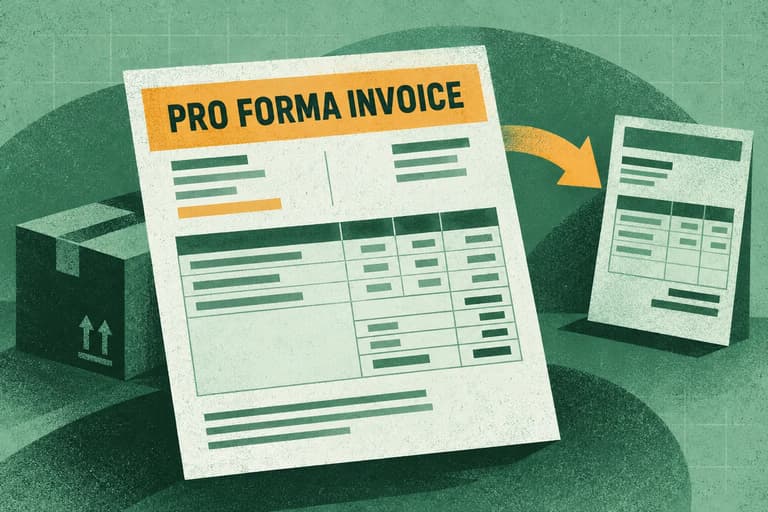
A pro forma invoice is a preliminary quote laid out like an invoice. You send it before the sale is final so the buyer can see what the job or order will cost. It is not a demand for payment.
The main point is that it lets the buyer see costs in invoice form before committing, and it gives way to a numbered final invoice once the sale is confirmed. Xero lists uses that range from arranging financing to confirming order costs.
What Is a Pro Forma Invoice?
Xero describes a pro forma invoice as a preliminary, good-faith estimate sent before a sale is finalized. It has no due date. trade.gov calls it "a quote in an invoice format". As summarized on Xero's page, Salesforce calls it "a detailed quote sent before the sale is finalised".
Sources differ on numbering. Xero advises a separate unique reference number kept outside your normal invoice sequence, plus a clear 'Pro Forma Invoice' label. As summarized on Xero's page, Salesforce says a number is not technically required but suggests one for tracking and audit.
Xero says a pro forma should include:
- Seller and buyer details
- A unique reference number
- Itemized quantities, unit prices and totals
- A pricing summary: subtotal, taxes, shipping and grand total
- Terms of sale: delivery timeline, payment terms and conditions
- A clear 'Pro Forma Invoice' label
Pro Forma Invoice Example
Here is a layout built only from the fields listed above. Replace each placeholder with your own details.

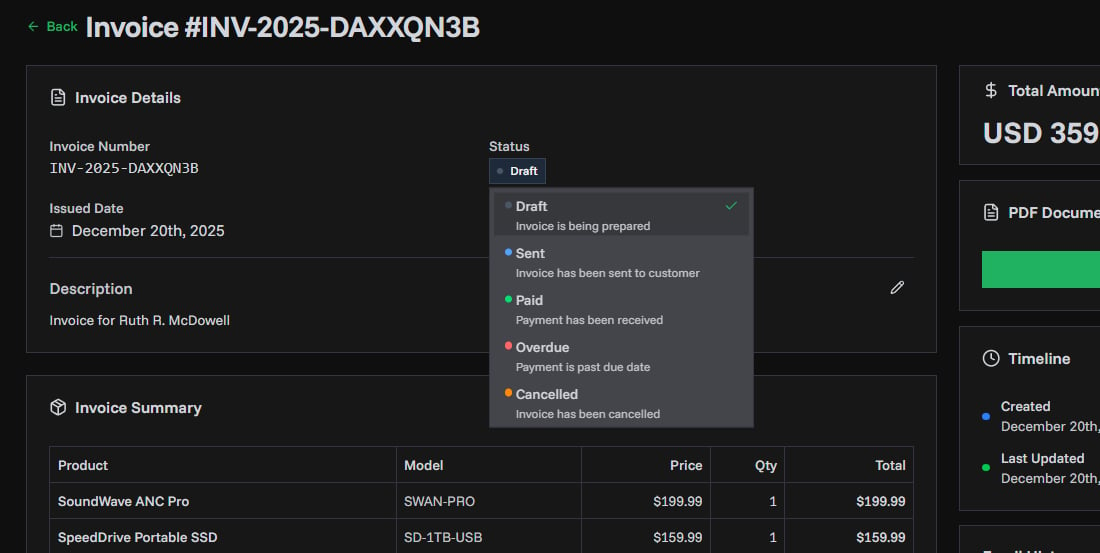
PRO FORMA INVOICE
Seller details and buyer details at the top, followed by your unique reference number.
| Item | Quantity | Unit price | Total |
|---|---|---|---|
| First item description | Quantity | Unit price | Line total |
| Second item description | Quantity | Unit price | Line total |
| Subtotal | Subtotal | ||
| Taxes | Taxes | ||
| Shipping | Shipping | ||
| Grand total | Grand total |
Below the table, add your terms of sale: delivery timeline, payment terms and any conditions. The client reviews it, confirms, and the work starts. This mirrors Xero's freelancer example of a scope-and-cost estimate approved before work begins.
Pro Forma vs Commercial Invoice vs Quote
The three documents sit at different points in a sale.
| Document | What it is | Binding |
|---|---|---|
| Quote or estimate | Price estimate before any commitment | Not binding unless accepted and converted to a contract |
| Pro forma invoice | Quote in invoice format | Not binding, can be revised or cancelled by either party before the transaction is finalised |
| Commercial invoice | Official customs document for international trade | Legally binding record |
A commercial invoice reflects the actual transaction value, is used to calculate tariffs and duties, and accompanies shipped goods across borders.
When to Use a Pro Forma Invoice
Xero lists these uses: arranging financing, clearing customs, meeting procurement rules, introducing new products or services, and confirming order costs.
The common thread is a buyer who needs to see costs in invoice form before committing. trade.gov notes that in many cases a pro forma can be used in place of a formal quotation.
Pro Forma Invoices for Customs and Imports
trade.gov says a buyer may need a pro forma to apply for an import license, contract for pre-shipment inspection, open a letter of credit or arrange a hard-currency transfer. It may not be a required shipping document. Do not change it without the buyer's consent. Suggested contents include the Incoterm, payment terms, estimated shipping date and a validity date.
In US customs, the term is narrower. Under 19 CFR 141.85, a pro forma invoice is an importer's statement of value in invoice form, used when no commercial invoice is available or required. Under 141.83(d), no commercial invoice is required for goods such as samples and gifts, goods returned after export for repair or alteration, and goods entered temporarily under bond. For such exempt merchandise, if no invoice or bill is available, the importer must file a pro forma invoice.
Under 19 CFR 141.91, entry can be made on a written declaration plus a pro forma invoice, with a bond of 1.5 times the invoice value. The real invoice must be produced within 120 days, or 50 days under the statistical-purposes exception.
By contrast, a commercial invoice under 141.86 must show the port of entry, sale details, a detailed description of each item, quantities, currency, itemized charges, country of origin and assists. It must be in English or have an accurate English translation attached.
Deposits and Advance Payments
The vendors disagree here. FreshBooks says some businesses take a partial advance payment against a pro forma. Xero says the buyer should not pay a pro forma. The safer route is a separate deposit invoice, or a deposit taken on the signed estimate.
QuickBooks says percentage deposits on estimates commonly run 10% to 50% of the estimated total. Stripe says 20% to 50% is often a good range, and notes that event venues often ask for 50% and freelancers closer to 30%.
Data Table
| Example | Deposit % |
|---|---|
| Simple job ($1,000) | 20 |
| Ongoing service ($5,000 over 6 months) | 25 |
| Custom project ($2,000) | 50 |
Source: Stripe, Deposit invoices 101: what they are and how to use them.
Check local limits before you set a deposit. In California, a home improvement contract down payment may not exceed $1,000 or 10% of the contract price, whichever is less. A violation is a misdemeanor punishable by a $100 to $5,000 fine and/or up to one year in county jail. QuickBooks suggests asking your local SBDC about limits on upfront payments.
How a Pro Forma Invoice Is Treated in Your Books
The pro forma itself is not recorded as accounts receivable or revenue. The IRS does not discuss pro forma invoices by name, but its Publication 538 explains that under the cash method, income is generally reported in the year it is actually or constructively received. Sending a pro forma does not by itself trigger income.
Money is different. Advance payments and deposits are generally reported as income in the year received. An accrual-method taxpayer may elect to defer part to the next year, but no further, using Form 3115. Cash-method businesses generally report a deposit when received.
For financial reporting, ASC 606 treats a payment received before delivery as a contract liability (deferred revenue). PwC's example is a $5,000 product with a $2,000 deposit. The deposit is a contract liability, and revenue is recognized on delivery along with the remaining $3,000. Ask your accountant which rules apply to you.
Turning a Pro Forma Into the Final Invoice
Xero's sequence is simple:
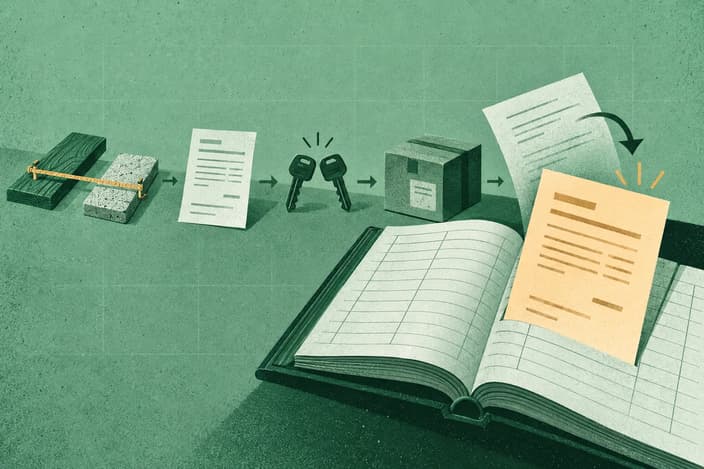
- Negotiate the terms.
- Send the pro forma.
- The buyer confirms.
- Deliver the goods or services.
- Issue the final sales invoice with an invoice number, payment terms and due date.
- Record that invoice in your books in place of the pro forma.
You can create the final invoice in PineBill.
Sources
- Xero US — What is a pro forma invoice?
- trade.gov (International Trade Administration) — Pro Forma Invoice
- eCFR — 19 CFR Part 141 Subpart F, Invoices
- eCFR — 19 CFR 141.83 - Pro forma invoice and commercial invoice exceptions
- eCFR — 19 CFR 141.85 - Pro forma invoice
- eCFR — 19 CFR 141.86 - Contents of invoices and general requirements
- FreshBooks — Proforma invoices
- QuickBooks (Intuit) — Deposits on estimates guide
- Stripe — Deposit invoices 101: what they are and how to use them
- California Legislative Information — California Business and Professions Code section 7159.5
- IRS — Publication 538 (01/2022), Accounting Periods and Methods
- PwC Viewpoint — 33.3 Presenting contract-related assets and liabilities
Last updated: November 2026. Regulations and vendor guidance may change, so check current rules before relying on them.