Section 179 vs. Bonus Depreciation in 2026: Tools and Trucks
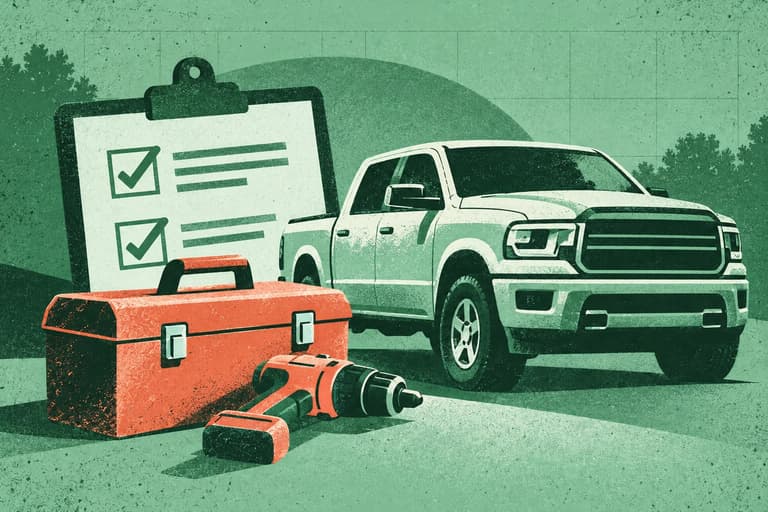
If you plan to buy tools, equipment or a work truck, you have two ways to deduct the cost: the Section 179 election or 100% bonus depreciation. Section 179 comes with dollar caps, an income limit and an SUV cap.
Two rules decide whether the deduction holds up. The asset must be placed in service in the tax year you claim it, and it must pass a business-use test. Keep the invoice or credit card slip along with proof of payment, because proof of payment alone does not establish a deduction.
Data note: The 2026 limits apply to taxable years beginning in 2026 and come from Rev. Proc. 2025-32. The 2025 values in the chart and table are prior-year values from the same dataset. The 2025 SUV cap of $31,300 comes only from that dataset, not from a stated fact in the sources. The depreciation and record-keeping rules come from IRS publications and instructions for 2025. Figures and guidance may change.
What Changed in the Section 179 and Bonus Depreciation Rules
According to the IRS, the maximum Section 179 deduction was raised from $1,000,000 for taxable years beginning after 2024, and the amounts are indexed for inflation after 2025. The next section shows the figures for 2026.
The One Big Beautiful Bill Act made the 100% additional first-year (bonus) depreciation deduction permanent for qualified property acquired after January 19, 2025. The IRS announced guidance on this in IR-2026-06, which covers Notice 2026-11.
2026 Section 179 Limits at a Glance
Rev. Proc. 2025-32 sets the Section 179 amounts for taxable years beginning in 2026. The chart compares the maximum deduction and the phase-out threshold with the prior-year values from the same dataset.
Data Table
| Limit | 2025 | 2026 |
|---|---|---|
| Maximum deduction | 2500000 | 2560000 |
| Phase-out threshold | 4000000 | 4090000 |
Source: Internal Revenue Service, Rev. Proc. 2025-32. The 2025 column comes from the same dataset.
The SUV cap is much smaller, so it is shown in its own table.
| Year | SUV cap |
|---|---|
| 2025 | $31,300 |
| 2026 | $32,000 |
There is also an income limit. The Section 179 deduction cannot exceed your taxable income from the active conduct of a trade or business. Any excess carries forward, according to a secondary source.
How 100% Bonus Depreciation Works
As noted above, 100% bonus depreciation is permanent for property acquired after January 19, 2025.
Section 179 is an election with caps and an income limit. Bonus depreciation also matters when a vehicle costs more than the SUV cap, because cost above the cap can be recovered through bonus depreciation, per a secondary source.
Ask your tax preparer which method fits your situation before you buy.
Placed in Service, Not Just Purchased
Paying for an asset is not enough. Property counts as placed in service when it is ready and available for a specific use, even if you are not yet using it.

Publication 946 gives examples:
- A machine that is ready and available on delivery counts in the delivery year.
- A machine delivered earlier but not installed and operational until later counts in the later year.
- A contractor's truck that needed lifting equipment was placed in service on the date he accepted delivery of the modified truck.
The last example shows that the date you receive the finished, modified vehicle can be the date that counts, not the date of purchase.
The More-Than-50% Business-Use Test and Recapture
For property used for both business and personal purposes, you can elect Section 179 only if business use is more than 50% in the year it is placed in service. You then multiply the cost by the business-use percentage.
For vehicles, divide business miles by total miles for all purposes during the year, excluding commuting miles.
Listed property used 50% or less in a qualified business use does not qualify for Section 179 or bonus depreciation. It is depreciated straight-line over its ADS recovery period, which is 5 years for automobiles and computers.
Recapture if business use drops
Say business use is above the threshold in the first year and falls later. The excess of depreciation allowed (including bonus and Section 179) over straight-line ADS depreciation is recaptured as income. You figure it on Form 4797 and report it as other income, for example on Schedule C line 6. The property's basis increases by the recapture amount.
If you file Schedule C or F, the part of the recapture attributable to a trade or business is subject to self-employment tax.
Trucks and SUVs: The Section 179 Cap
The most you can take into account under Section 179 for an SUV in 2026 is the cap shown in the table above. According to a secondary source, the cap applies to SUVs rated between 6,001 and 14,000 lb GVWR.
The same source says it does not apply to these vehicles:
- Vehicles with a cargo area of at least 6 ft that is not readily accessible from the passenger compartment.
- Vehicles seating more than nine passengers behind the driver.
- Vehicles with a fully enclosed driver compartment and no seating behind the driver.
Records to Keep for the Deduction
For each purchase, keep documents that identify the payee, the amount paid, proof of payment, the date incurred and a description of the item. Without a canceled check, a legible financial account statement can prove payment. Proof of payment alone does not establish a deduction, so also keep the invoice or credit card slip showing you incurred the cost.
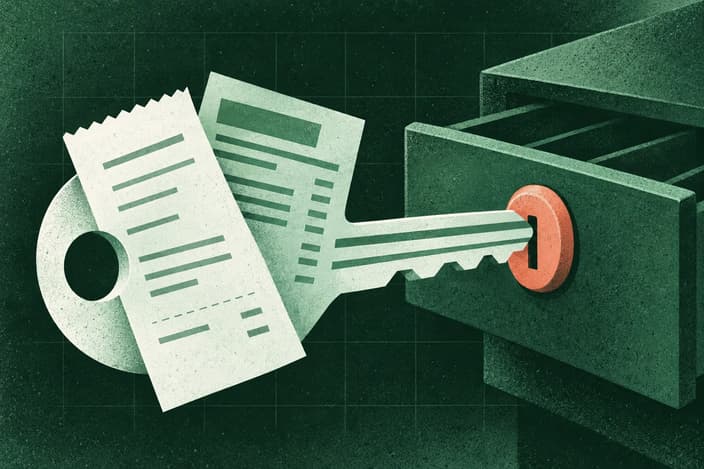
For a vehicle, business use is measured in miles, so it is sensible to track your business miles and total miles through the year.
Keep records on property until the period of limitations expires for the year you dispose of it. You need them to figure depreciation and any gain or loss on a sale. The default period is 3 years from filing. The IRS page on how long to keep records lists the other periods.
Sources
- Internal Revenue Service — Rev. Proc. 2025-32
- Internal Revenue Service — Working Families Tax Cuts - Businesses
- Internal Revenue Service — IR-2026-06: Treasury, IRS issue guidance on the additional first-year depreciation deduction amended as part of the One Big Beautiful Bill (Notice 2026-11)
- Tax Field Guide — Rev. Proc. 2025-32 & Notice 2026-11: §179 SUVs
- IRS — Publication 946 (2025), How To Depreciate Property
- IRS — Instructions for Form 4562 (2025)
- IRS — 2025 Instructions for Form 4797
- IRS — Publication 583 (12/2024), Starting a Business and Keeping Records
- Internal Revenue Service (IRS) — What kind of records should I keep
- Internal Revenue Service (IRS) — How long should I keep records?
Last updated: 2026. Tax rules and guidance may change, so confirm the details for your purchase with a tax professional.