How to Estimate Shipping Costs for Small Business Invoices
Over 48% of customers abandon carts due to high shipping costs, and the average e-commerce order ships for $7.96. For small businesses and freelancers, estimating shipping costs accurately isn't optional—it's essential to maintain profit margins and trust with clients.
Inaccurate estimates lead to lost revenue or surprise fees that damage relationships. This guide breaks down how to estimate shipping costs for your invoices, using real 2025 carrier rates, proven methods, and actionable steps. Whether you're freelancing or running an SMB, integrate these into your invoicing workflow with tools like PineBill for seamless line-item additions.
Why Accurate Shipping Cost Estimation Matters for Invoicing
Shipping impacts your bottom line directly. USPS 2025 rates rose 6.3% for Priority Mail and 7.1% for Ground Advantage. Underestimating eats into profits; overestimating loses sales.
For service-based freelancers, shipping physical deliverables like prototypes or products adds a layer of complexity. SMB owners shipping inventory face even higher stakes with dimensional weight and zones.
Key benefits of precise estimates:
- Maintain 10-15% average shipping as order value percentage
- Build client trust with transparent invoices
- Avoid common pitfalls like cart abandonment (64% prioritize delivery cost)
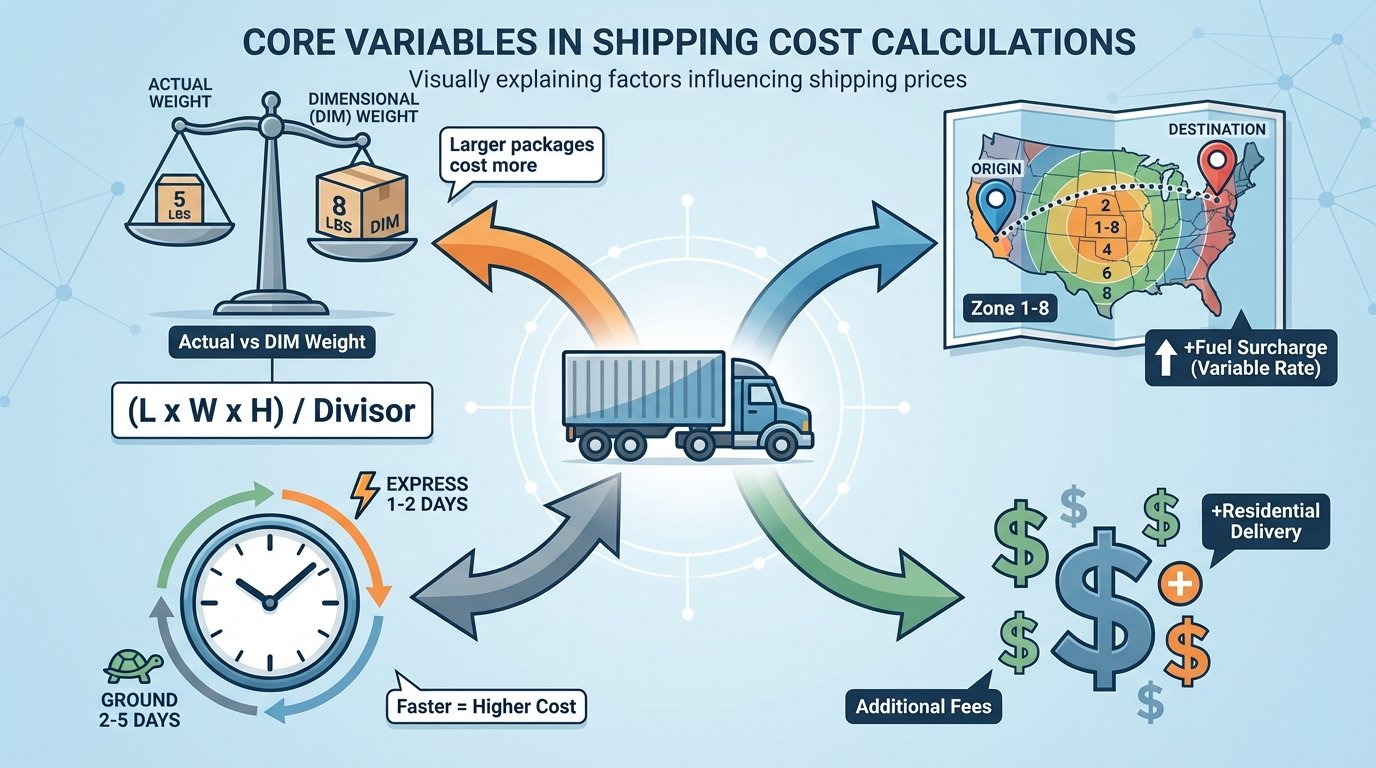
Key Factors That Determine Shipping Costs
Carriers like USPS, UPS, FedEx, and DHL base rates on these elements:
1. Package Weight and Dimensional Weight
Actual weight is straightforward—use a scale. But dimensional weight (DIM) often costs more for bulky items.
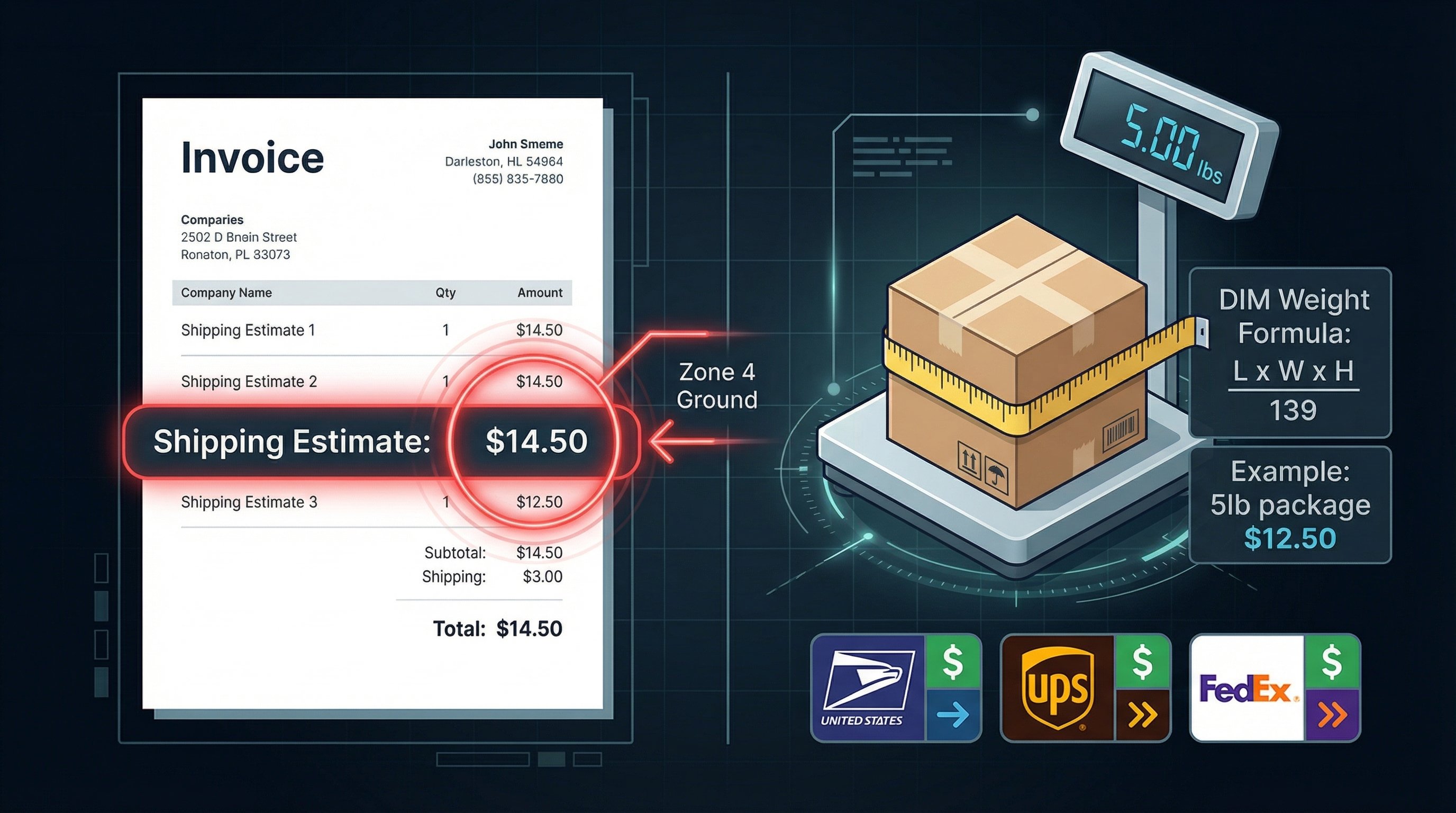
DIM Formula: (Length × Width × Height in inches) ÷ Divisor (139 for UPS/FedEx domestic, 166 for USPS)
| Package Type | Actual Weight (lbs) | Dimensions (LxWxH inches) | DIM Weight | Billable Weight |
|---|---|---|---|---|
| Small Box | 2 | 10×8×6 | 3.3 | 3.3 |
| Bulky Item | 3 | 20×15×10 | 21.7 | 21.7 |
| Flat Envelope | 0.5 | 12×9×0.25 | 0.2 | 0.5 |
2. Origin and Destination Zones
Carriers divide the US into zones (1-8). Zone 1-2: local (cheaper); Zone 8: cross-country (2-3x more).
3. Shipping Speed and Services
Ground: 2-5 days, lowest cost. Express: 1-2 days, premium.
4. Additional Fees
Fuel surcharges (up 8-12% in 2025), residential delivery (+$5), signature (+$6).
Step-by-Step Guide to Estimate Shipping Costs
Use carrier calculators (FedEx, UPS, USPS free tools) or software for real-time quotes.
Gather Package Details
Measure length, width, height to nearest inch. Weigh accurately. Note origin ZIP, destination ZIP, speed.
Input into Carrier Calculator
Visit USPS.com/ship, UPS.com/rates, or FedEx.com/rates. Enter details for instant quote.
Example: 5lb, 12×10×8 box, Zone 4 Ground = ~$12-15 (2025 rates).
Account for Hidden Costs
Add 10-20% buffer for surcharges/packaging ($1-2 avg). Use historical data for averages.
Choose Calculation Method
- Real-time (API): Dynamic, accurate for e-commerce.
- Flat-rate: $5-10/order, simple for SMBs.
- Weight-based: $1 per lb tiers.
Add to Invoice
In PineBill, create a line item: "Shipping Estimate - USPS Ground" with your calculated amount.
2025 Carrier Rate Comparison for Small Businesses

| Carrier | Ground (1-5lb, Zone 4) | Priority/Express (Zone 4) | DIM Divisor | Small Biz Discounts |
|---|---|---|---|---|
| USPS | $8-12 (+7.1%) | $10-18 (+6.3%) | 166 | Commercial Plus |
| UPS | $10-15 | $20-30 | 139 | Account needed |
| FedEx | $11-16 | $22-35 | 139 | Free calculator |
| DHL | $12-18 (intl focus) | $25-40 | Varies | Pallet quotes |
Rates vary; always verify with tools.
Common Mistakes in Estimating Shipping Costs
- Ignoring DIM Weight: Bulky items billed higher than actual.
- Zone Miscalculations: Assuming flat national rates.
- No Buffer for Fees: Fuel hikes surprise you.
- Poor Packaging: Extra weight/damage claims.
- Free Shipping Trap: Absorb costs without margin adjustment.
How to Add Shipping Estimates to Your Invoices
Transparency wins. List as separate line: "Estimated Shipping (Ground, Zone 4): $14.50"
Note: "Actual costs billed post-shipment if differ by >10%." Use PineBill's customizable templates to automate.
Pros of line items:
- Clients see value breakdown
- Easy adjustments
- Tracks expenses for taxes
Tips to Reduce Shipping Costs
- Negotiate SMB rates (5-20% off retail).
- Bundle orders.
- Optimize packaging (right-size boxes).
- Use USPS for < 1lb.
- Offer zone-based tiers.
Integrate with invoicing software for auto-quotes.
Key Takeaways
- Always calculate DIM weight alongside actual.
- Use free carrier tools for 2025-updated rates.
- Add 15% buffer to estimates.
- List shipping separately on invoices for clarity.
- Track historical data to refine averages.
- Leverage PineBill for quick line-item management.