Electrician Salary 2025: US Averages by State & Labor Cost
Electricians remain in high demand in 2025, fueled by electrification, renewables, and infrastructure projects. For electrical contractors and business owners, knowing electrician salaries is essential for accurate bidding and invoicing. This guide provides 2025 data and practical tips to bill labor costs profitably.
Average Electrician Salary in the US (2025)
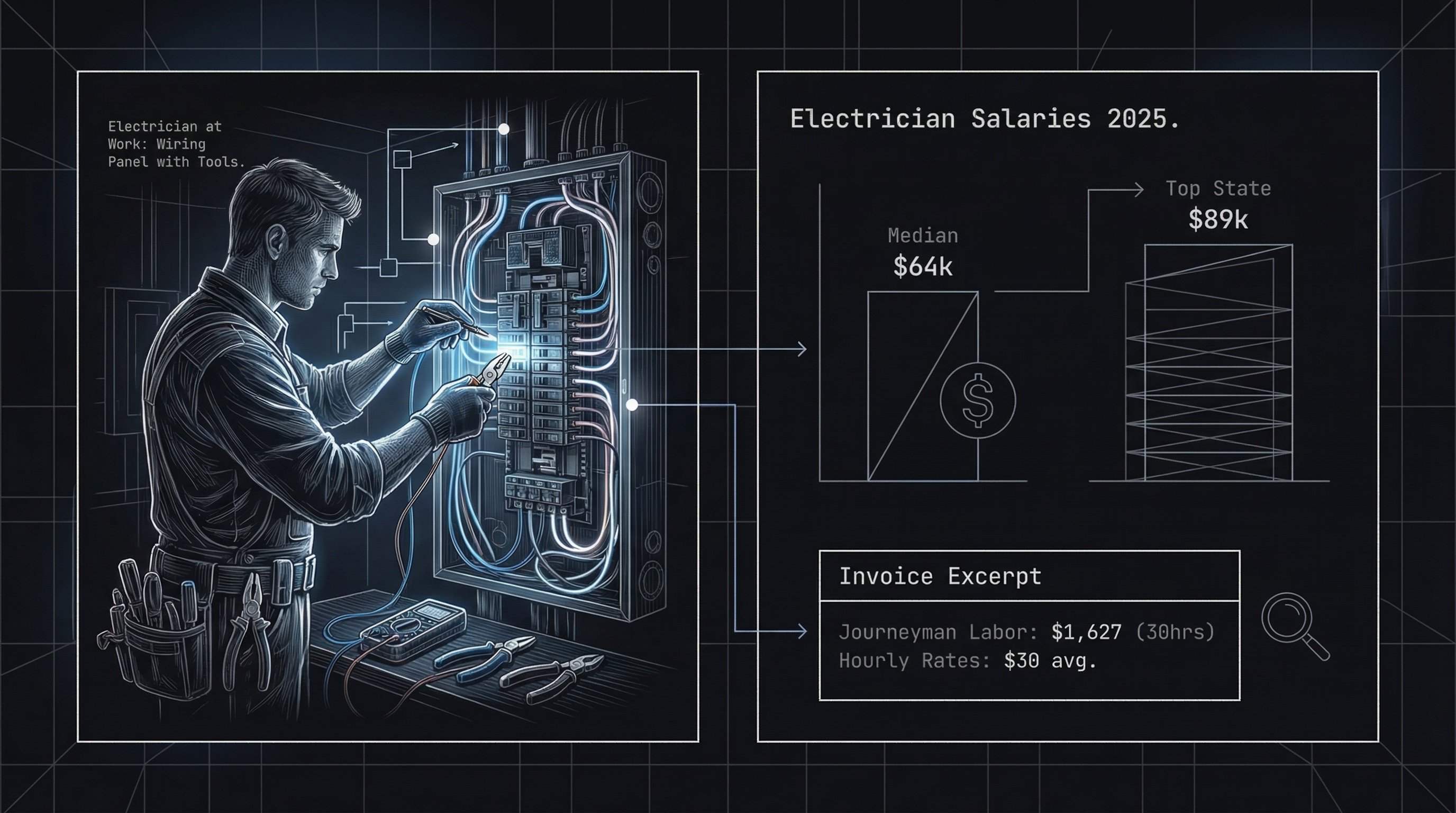
BLS May 2024 data shows a median annual wage of $61,590 for electricians ($29.61/hour). With 6% job growth projected and wage increases of 4-5%, 2025 medians should reach $64,000-$65,000.
Supporting sources:
- Salary.com: $68,000 average.
- ZipRecruiter: $64,500.
- Other sources report $60,000+ averages, with journeymen at $65,000 .
| Metric | Annual Salary | Hourly Rate |
|---|---|---|
| National Median | $61,590-$65,000 | $29.61-$31.25 |
| Entry-Level (Bottom 25%) | $48,440 | $23.29 |
| Experienced (Top 25%) | $81,000+ | $39+ |
| Average | $62,000-$68,000 | $30-$33 |
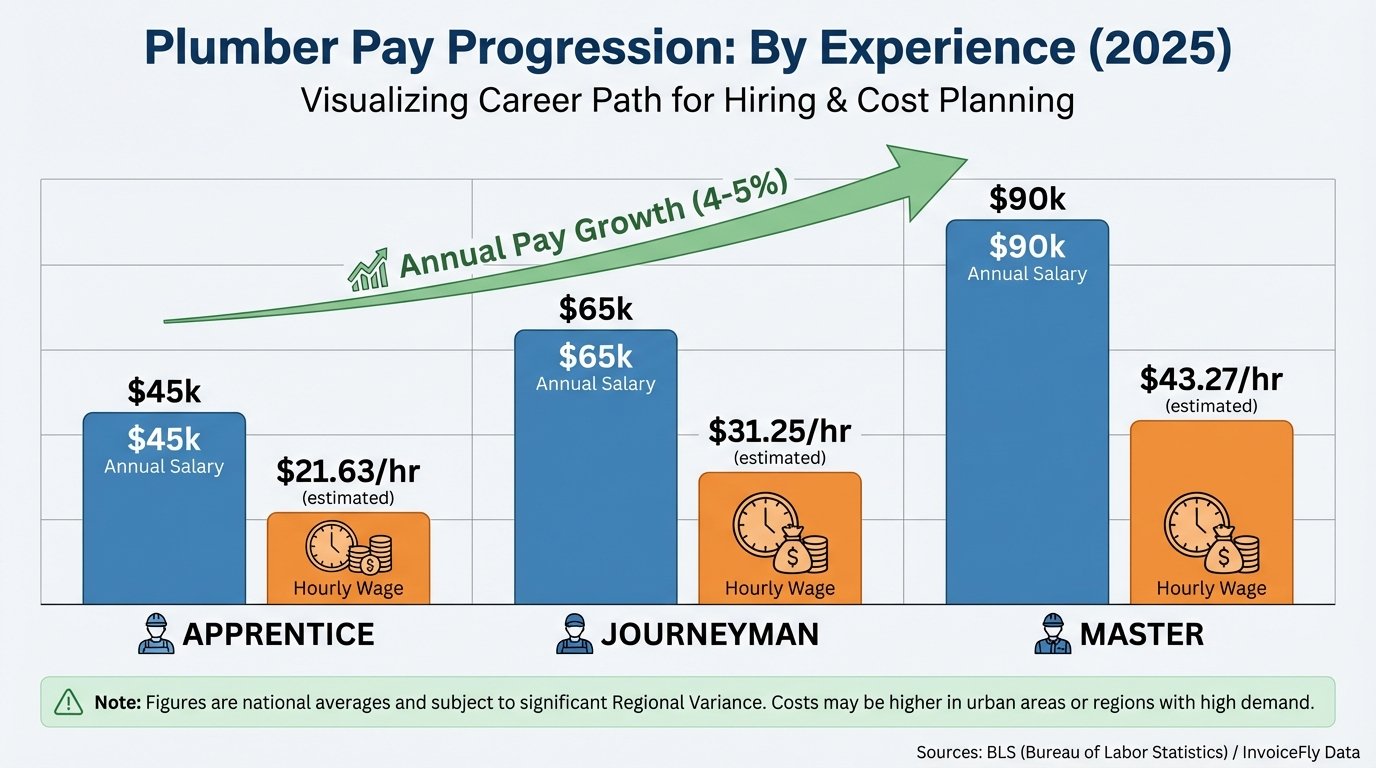
Apprentices earn less ($40k-$50k), while master electricians exceed $90,000.
Electrician Salaries by Years of Experience
Licensing and hours logged boost pay significantly.
| Experience Level | Annual Salary Range | Hourly Range |
|---|---|---|
| Apprentice (0-4 Yrs) | $40,000-$55,000 | $20-$26 |
| Journeyman (4-8 Yrs) | $55,000-$75,000 | $27-$36 |
| Master (8+ Yrs) | $75,000-$100,000+ | $37-$50+ |
(Data from BLS, InvoiceFly, and NECA reports.)
Highest-Paying States for Electricians (2025)
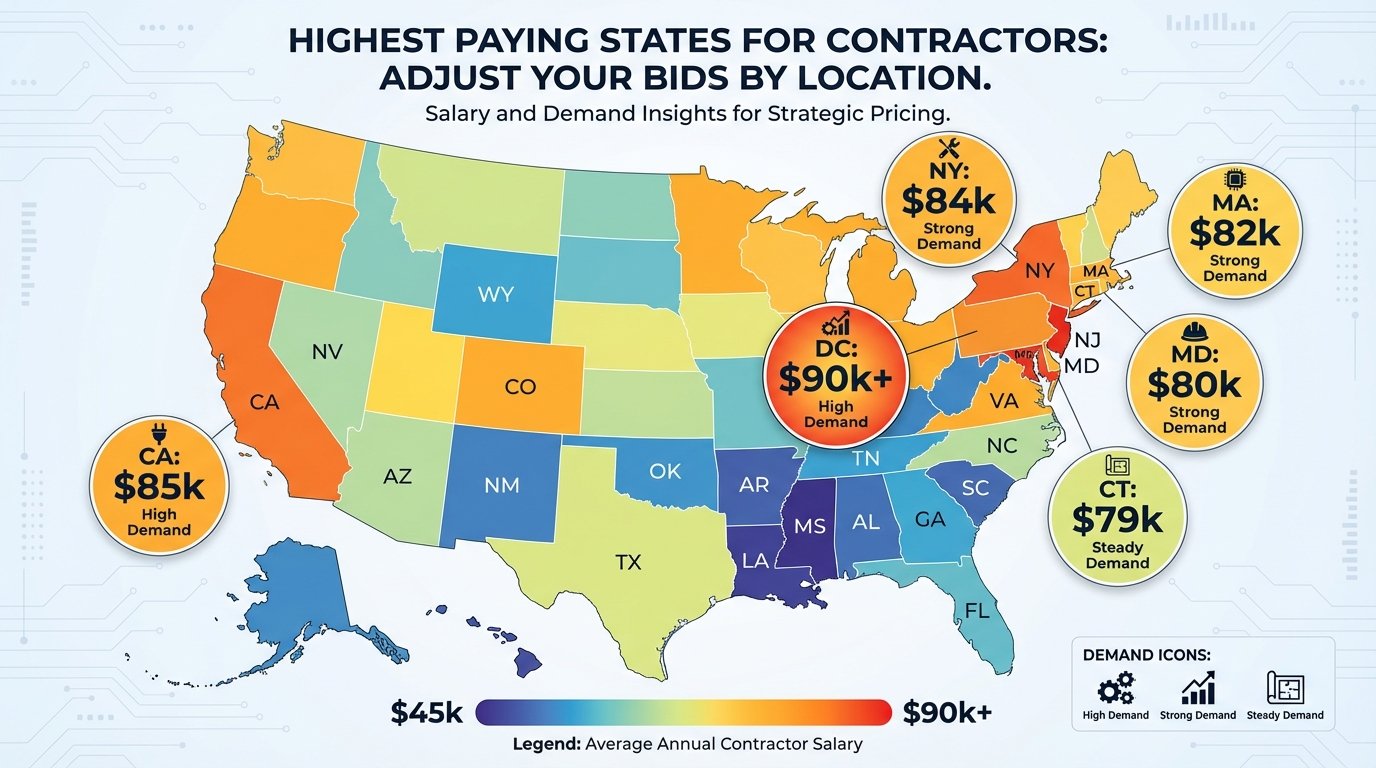
High-demand, union-strong states pay premiums.
| Rank | State/District | Average Annual Salary |
|---|---|---|
| 1 | District of Columbia | $89,500 |
| 2 | New Jersey | $84,000 |
| 3 | Washington | $82,500 |
| 4 | Hawaii | $81,000 |
| 5 | North Dakota | $79,000 |
| 6 | Illinois | $78,000 |
| 7 | California | $77,500 |
(Source: BLS, Construction Coverage. Lowest: Mississippi ~$45,000.)
Factors Affecting Electrician Salaries
Key influencers:
- Certifications: Journeyman/master licenses add 20-40%.
- Union vs. Non-Union: Unions offer $10-$15/hour more.
- Specialization: Solar, industrial controls pay premiums.
- Overtime/Travel: Common, boosting effective rates 20-50%.
- Market Trends: EV charging, data centers drive demand.
Calculating Labor Costs for Electrical Invoices
Electrical work includes unique costs like materials (30-40% of total). Formula:
Total Labor = (Wage × Hours) + Markup (25-35%) + Burden (20-30%) + Travel/Materials
Example: $35/hour journeyman, 30 hours:
- Base: $1,050
- Markup 30%: $315
- Burden 25%: $262.50
- Total: ~$1,627.50
| Component | % of Base Wage | Example on $1,050 |
|---|---|---|
| Direct Wages | 100% | $1,050 |
| Overhead Markup | 25-35% | $262-$367 |
| Burden (Taxes/Ins.) | 20-30% | $210-$315 |
| Materials/Travel | Varies | $200-$500 |
| Total Billable | 145-165%+ | $1,722-$2,232 |
Best Practices for Invoicing Electrical Labor
- Detailed Line Items: Break out labor, wire, fixtures separately.
- Change Orders: Bill extras like upgrades promptly.
- Time + Materials (T&M): Ideal for repairs; cap rates.
- Software Integration: PineBill tracks hours, materials, generates compliant invoices.
- Permit/Compliance Fees: Pass through with documentation.
Log Time and Materials
Use apps for GPS-tracked hours and inventory.
Standardize Rates
Set apprentice/journeyman rates in templates.
Invoice on Milestones
Rough-in, trim-out, final—bill progressively.
Key Takeaways
- 2025 median ~$64,000 nationally; DC tops at $89,500.
- Experience key: Apprentices $45k, masters $90k+.
- Invoice labor at 145-165%+ of wages, including materials.
- Leverage demand for EV/renewables in bids.
- Automate with PineBill for error-free billing.