Construction Worker Salary 2025: US Averages by State
The construction industry faces a labor shortage in 2025, driving up wages and making accurate labor cost estimation critical for contractors. Whether you're hiring general laborers or skilled tradespeople, understanding construction worker salaries ensures profitable bids and invoices. This guide breaks down 2025 salary data and shares invoicing strategies to manage costs effectively.
Average Construction Worker Salary in the US (2025)
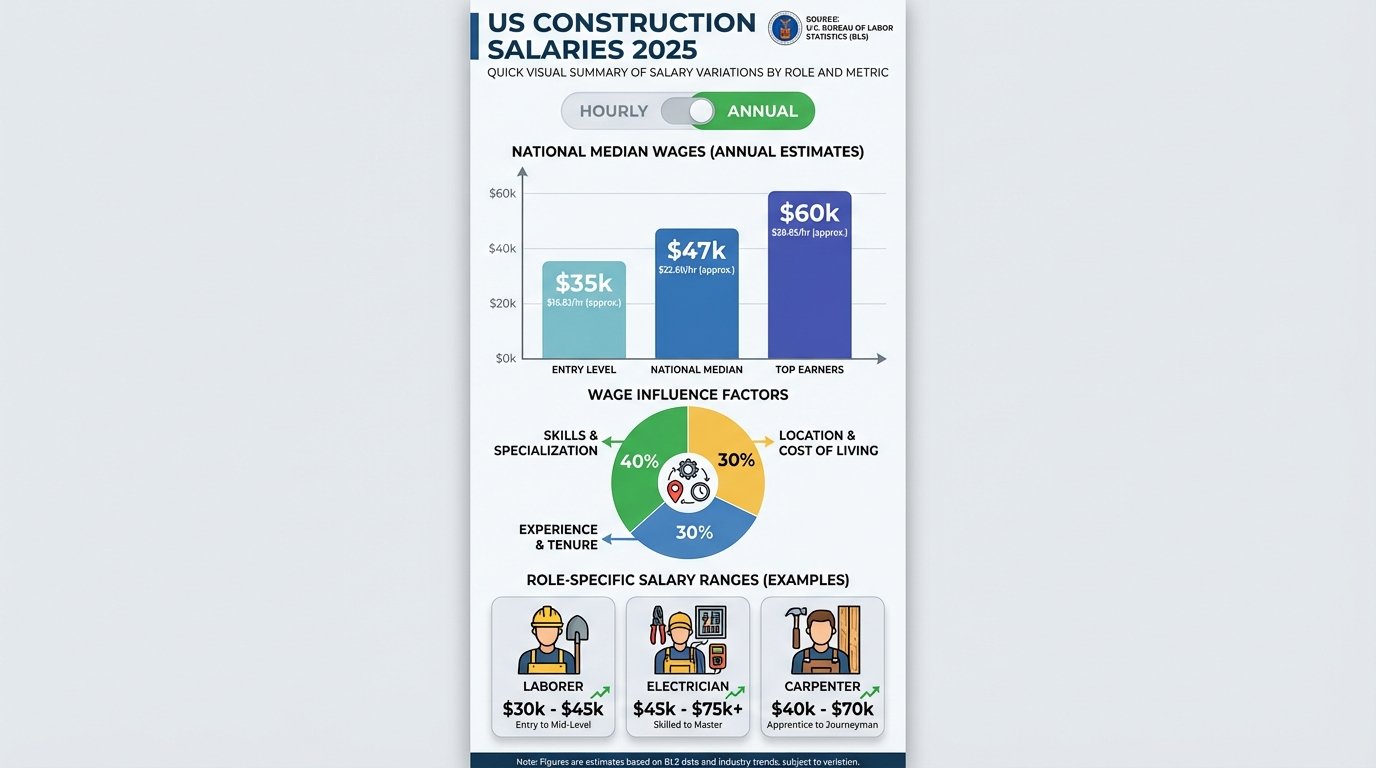
According to the U.S. Bureau of Labor Statistics (BLS) data from May 2024, the median annual wage for construction laborers stands at $46,050, or about $22.14 per hour. With projected wage growth of 3.5-4.7% in 2025 due to industry demand, expect medians around $47,600-$48,100.
Other sources confirm this trend:
- Indeed reports an average of $41,404 annually for laborers.
- ZipRecruiter estimates $52,333 yearly as of late 2025.
- Analysis pegs the average at $46,000, with entry-level at $35,000 and specialists over $55,000.
Here's a breakdown of key metrics:
| Metric | Annual Salary | Hourly Rate |
|---|---|---|
| National Median | $46,050-$48,000 | $22-$23 |
| Entry-Level (Bottom 25%) | $37,070 | $17.82 |
| Experienced (Top 25%) | $56,780+ | $27+ |
| Average (All Sources) | $45,000-$52,000 | $20-$25 |
These figures vary by role—general laborers earn less than electricians or welders, who command $50,000-$70,000 annually.
Construction Worker Salaries by Years of Experience
Experience directly impacts pay. Entry-level workers start lower but advance quickly through apprenticeships and on-the-job training.
| Experience Level | Annual Salary Range | Hourly Range |
|---|---|---|
| 0-2 Years (Entry) | $30,000-$37,000 | $15-$18 |
| 3-7 Years (Mid) | $40,000-$50,000 | $19-$24 |
| 8+ Years (Senior) | $55,000-$70,000+ | $26-$35+ |
Source: BLS and industry reports like InvoiceFly. Skilled trades like carpenters or heavy equipment operators can exceed $80,000 with certifications.
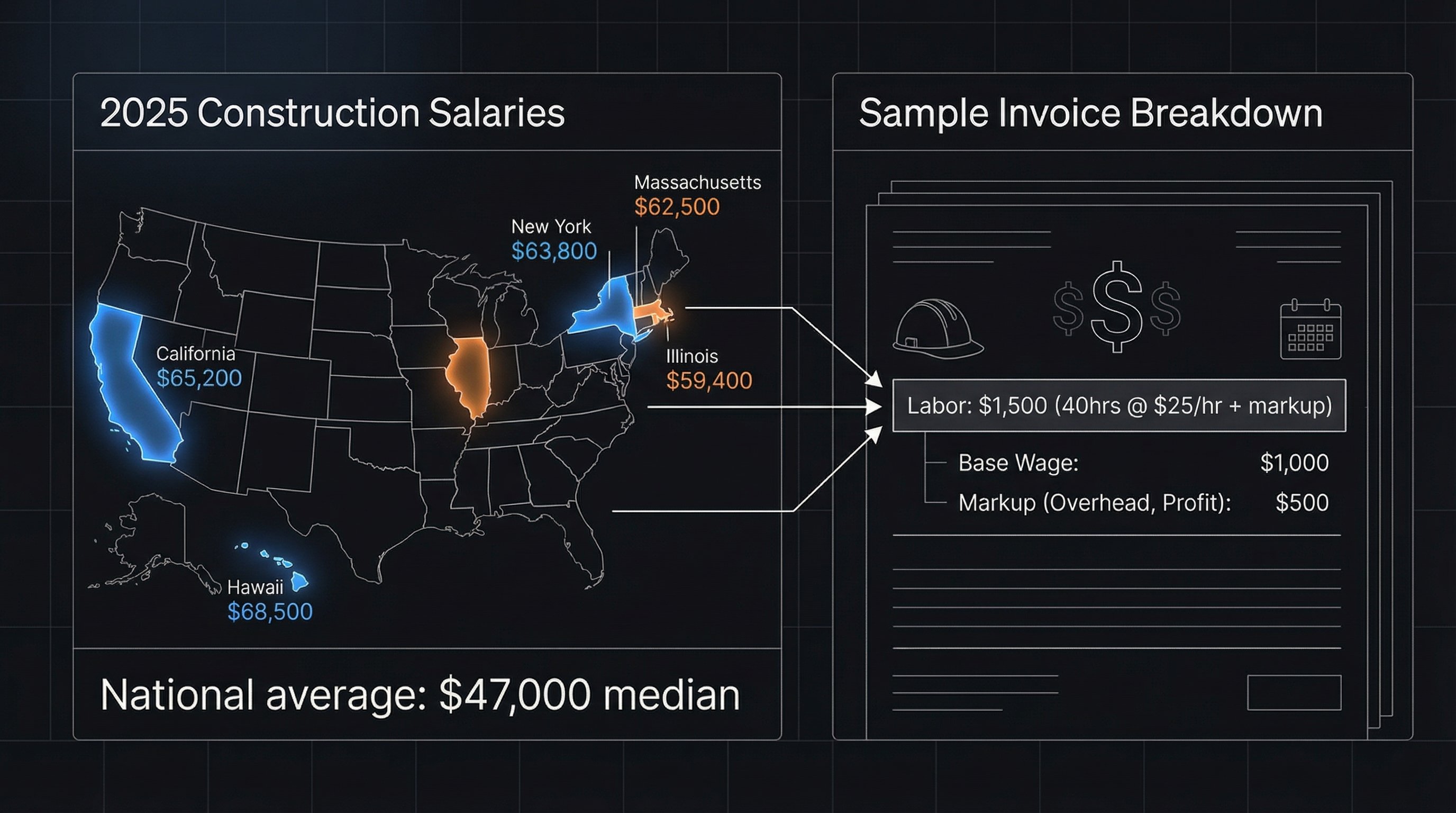
Highest-Paying States for Construction Workers (2025)
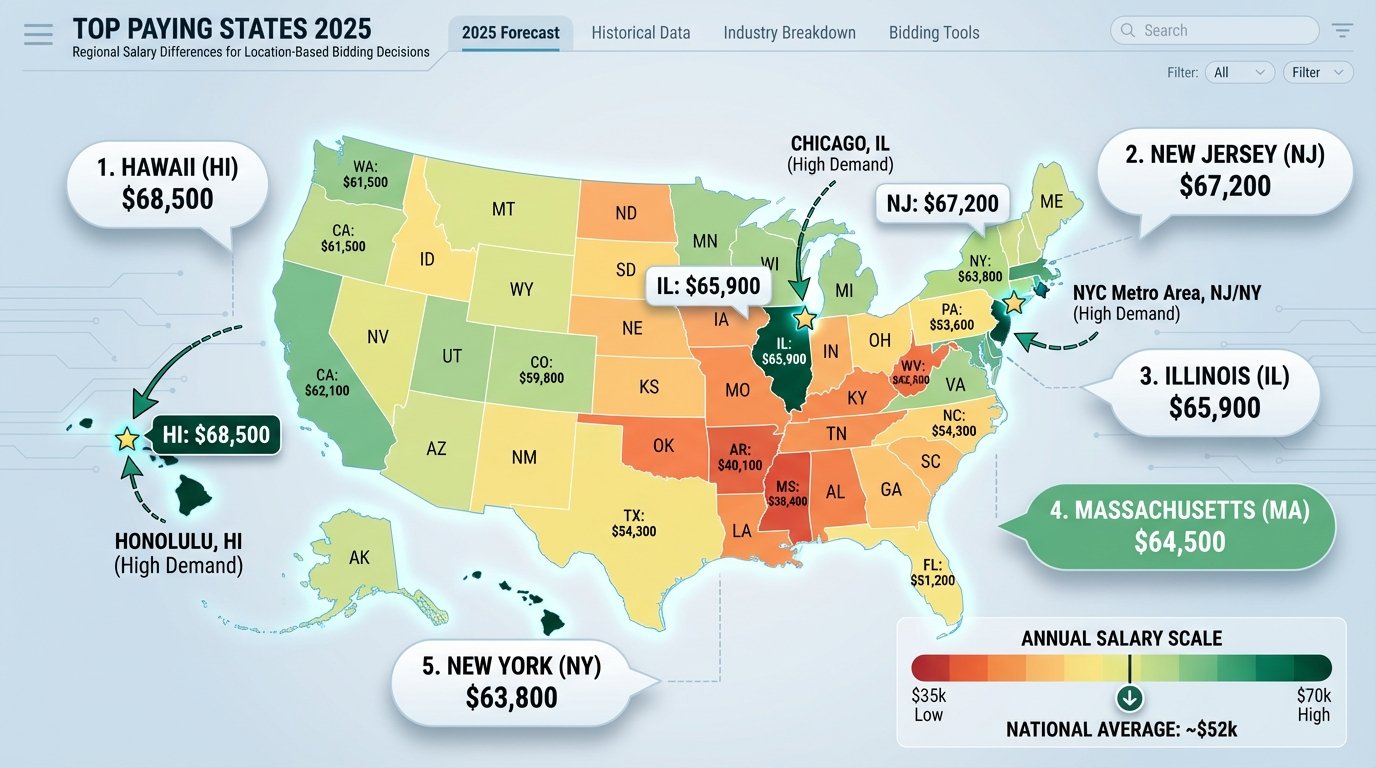
Location drives salary due to cost of living, demand, and union presence. Hawaii leads, followed by high-cost coastal states.
| Rank | State | Average Annual Salary |
|---|---|---|
| 1 | Hawaii | $68,500 |
| 2 | New Jersey | $67,000 |
| 3 | Illinois | $66,500 |
| 4 | Massachusetts | $65,000 |
| 5 | New York | $61,000 |
| 6 | California | $60,000+ |
| 7 | Washington | $58,000 |
(Data adapted from BLS, InvoiceFly, and Construction Coverage reports.) Lower-paying states like Alabama or Mississippi average $35,000-$40,000.
Factors Influencing Construction Worker Salaries
Several elements determine pay rates:
- Skill Level: General laborers ($15-$20/hour) vs. specialists like ironworkers ($35-$50/hour).
- Union Membership: 10-30% premium, plus benefits.
- Project Type: Commercial/infrastructure pays more than residential.
- Location and Economy: Urban areas and booming markets offer higher wages.
- Trends: 4% job growth through 2030 (BLS), green building demand boosting specialized pay.
Calculating Labor Costs for Construction Invoices
To invoice accurately, factor in wages plus overhead. Use this formula:
Total Labor Cost = (Hourly Wage × Hours) + (Overhead Markup 20-30%) + Burden (Taxes, Insurance 15-25%)
Example: A $25/hour worker on a 40-hour job:
- Base: $1,000
- Overhead (25%): $250
- Burden (20%): $250
- Total Billable: $1,500
| Cost Component | Percentage | Example on $1,000 Base |
|---|---|---|
| Direct Wages | 100% | $1,000 |
| Overhead | 20-30% | $200-$300 |
| Burden Costs | 15-25% | $150-$250 |
| Total | 135-155% | $1,350-$1,550 |
Track hours precisely to avoid underbilling.
Track Hours Accurately
Log time daily using mobile apps. Include travel and setup.
Apply Markups Consistently
Standardize rates in your invoicing software for all projects.
Review and Adjust
Compare actual vs. estimated costs monthly to refine bids.
Best Practices for Invoicing Labor Costs in Construction
- Choose Billing Method: Hourly for variable work; fixed-price for defined scopes to protect margins.
- Itemized Breakdowns: List roles, rates, hours separately for transparency.
- Include Retainage: Hold 5-10% until project completion.
- Automate Tracking: Use tools like PineBill for time logs, automated invoices, and payments.
- Progress Billing: Invoice 70-90% upfront, balance on milestones.
PineBill simplifies this with customizable invoice templates, time tracking integration, and real-time cost reports—ensuring you bill labor correctly every time.
Key Takeaways
- Expect 2025 medians around $47,000-$48,000 nationally, higher in states like Hawaii ($68,500).
- Factor experience and skills: Entry $35k, seniors $60k+.
- Bill labor at 135-155% of wages to cover overhead and profit.
- Track hours meticulously and use automation for accuracy.
- Stay competitive by monitoring BLS data and local trends.